The 2026 Dubai Property Buying Guide: Your Complete Roadmap to Smart Real Estate Investment
- 1st Jan 2026
- 491
- 0
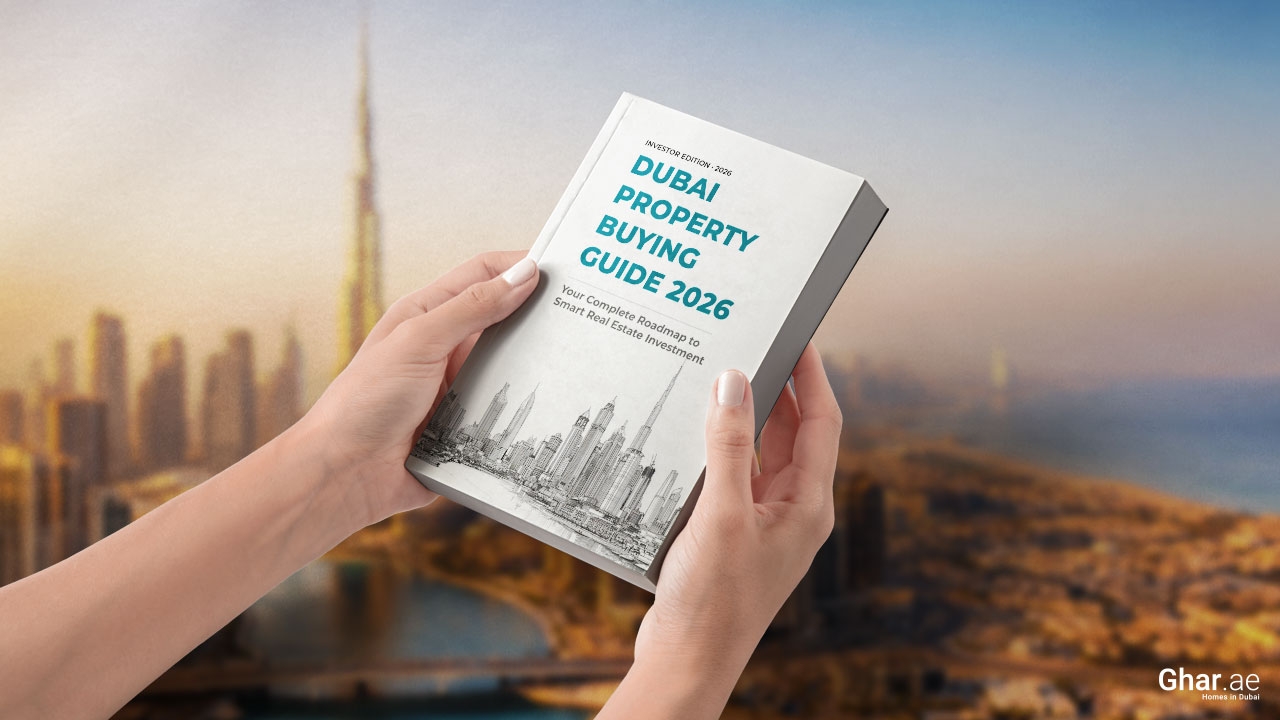
Buying property in Dubai in 2026 isn't just about finding a beautiful apartment or villa—it's about understanding a sophisticated, investor-friendly market that rewards strategic thinking and punishes hasty decisions.
Why Dubai Property Remains a Compelling Investment in 2026
Dubai's real estate market enters 2026 from a position of remarkable strength. Transaction volumes exceeded AED 431 billion in the first half of 2025 alone, signaling sustained confidence from both local and international buyers. What makes Dubai particularly attractive isn't just the glamorous skyline or luxury lifestyle—it's the fundamentals.
The tax advantage alone is transformative. No property taxes. No income taxes. No capital gains taxes. For investors comparing Dubai to London, Singapore, or New York, this immediately creates a 20-40% advantage in net returns before you even consider rental yields.
Rental yields consistently outperform global benchmarks. While prime London delivers 2-3% and Manhattan hovers around 3-4%, Dubai's established communities regularly generate 5-8% gross yields. High-demand areas like Jumeirah Village Circle and Dubai Sports City have pushed yields even higher, particularly for well-managed apartments under AED 1.5 million.
The Golden Visa pathway transforms property from an asset into a lifestyle gateway. Investments starting at AED 2 million qualify buyers for 10-year residency, effectively creating a dual benefit: portfolio diversification plus geographic optionality for families seeking world-class education, healthcare, and business opportunities.
Understanding the 2026 Market Dynamics: Supply, Demand, and Strategic Timing
The Dubai market in 2026 is experiencing a critical inflection point. Between 2025 and 2027, approximately 150,000 new units will be delivered—a 20% increase in total housing stock. This supply wave is already beginning to create distinct opportunities across different market segments.
Prime waterfront and villa segments remain undersupplied. Despite overall supply increases, family-oriented villas in master-planned communities like Dubai Hills Estate, Arabian Ranches, and Damac Hills face sustained demand from growing expatriate families and Emirati nationals seeking lifestyle upgrades. This scarcity dynamic supports 4-6% annual appreciation in select communities.
Mid-market apartments in oversupplied corridors may see 5-10% corrections. Areas that experienced speculative developer launches without corresponding tenant demand will face pricing pressure. This isn't necessarily negative—it creates negotiation leverage for informed buyers who can identify buildings with strong management and genuine rental appeal.
The rental market is stabilizing but remains fundamentally strong. Vacancy rates may inch up to 12% in certain submarkets, creating seasonal softness (particularly during summer months). However, population growth driven by new visa reforms, corporate relocations, and Dubai's expanding economic base should support overall rental growth of 4-6% annually.
Smart buyers in 2026 recognize this isn't a "buy anything anywhere" market—it's a "buy the right asset in the right location with the right cost structure" market.
Where to Buy in Dubai: Community Selection Based on Investment Goals
Dubai's real estate landscape offers something for every budget and strategy, but not every community deserves your capital. Here's how to think about location selection strategically.
Established Premium Communities: Best for Stability and Liquidity
Dubai Marina remains the gold standard for waterfront apartment living. Average prices of AED 1,800-2,500 per square foot reflect genuine demand from young professionals, corporate relocations, and tourist rental activity. The community's maturity means proven rental yields (6-8%), established building management standards, and deep resale liquidity.
Downtown Dubai commands premium pricing (AED 2,000-3,000 per square foot) for valid reasons: iconic Burj Khalifa proximity, world-class retail and dining, and genuine scarcity. While yields are lower (4-6%), capital preservation and appreciation potential attract wealth preservation buyers.
Palm Jumeirah represents Dubai's luxury villa segment at its finest. Properties start at AED 20 million and climb into nine figures for signature mansions. The Palm's beachfront scarcity, branded residences, and international recognition create sustained demand from ultra-high-net-worth buyers seeking trophy assets.
Family-Oriented Master Communities: Best for Long-Term Appreciation
Dubai Hills Estate combines golf course living, extensive green spaces, and family-friendly infrastructure. Villas range from AED 5-15 million, while apartments offer more accessible entry points. The community's comprehensive master plan, proximity to Dubai Hills Mall, and strong school infrastructure support 6-8% annual appreciation.
Arabian Ranches and Ranches 2 deliver established villa living with mature landscaping and proven community management. Prices have appreciated steadily due to limited supply of quality family villas within 20 minutes of Business Bay and DIFC employment centers.
Damac Hills (formerly Akoya) offers comparable villa living at more accessible price points, though community maturity and amenities completion remain considerations for buyers.
Emerging Growth Corridors: Best for Value-Seeking Investors
Dubai Creek Harbour represents one of Dubai's most ambitious master developments, positioned between Downtown and Dubai International Airport. Current pricing of AED 1,500-2,200 per square foot offers material discounts to comparable Downtown units, with genuine appreciation potential as the community matures and the Dubai Creek Tower eventually completes.
Dubai South and Emaar South benefit from proximity to Al Maktoum International Airport and Expo City infrastructure. Prices starting at AED 900-1,400 per square foot attract budget-conscious buyers, though rental yields and resale liquidity require careful analysis.
Business Bay continues evolving from pure commercial to mixed-use residential, offering canal views and urban connectivity at AED 1,500-2,000 per square foot. The area's 24/7 energy and metro accessibility appeal to young professionals.
Budget-Friendly High-Yield Communities
Jumeirah Village Circle (JVC) has emerged as Dubai's yield champion, with well-managed apartments delivering 7-9% gross yields. Prices of AED 1,000-1,500 per square foot create accessible entry points, though service charge quality varies significantly between buildings.
International City and Discovery Gardens serve Dubai's massive mid-income workforce, offering the highest percentage yields (8-10%) but with corresponding challenges in tenant quality, building maintenance, and resale appeal.
Property Types: Matching Assets to Objectives
Apartments: Liquidity, Yield, and Simplicity
Apartments dominate Dubai's transaction volume for good reason—they're easier to buy, easier to rent, and easier to sell. Studios starting at AED 500,000 in communities like JVC or Studio City offer the lowest entry barrier, while three-bedroom units in prime locations command AED 3-6 million.
The service charge factor cannot be overstated. A well-located apartment with excessive service charges (AED 25-30 per square foot annually) can transform a theoretically strong 7% yield into a mediocre 4.5% net return. Dubai Land Department maintains a Service Charge Index—use it religiously when evaluating buildings.
Building management quality determines long-term value. Elevators that break down, security systems that fail, pools that close for months—these aren't just inconveniences, they're direct threats to rental income and capital value. Research building reputation through tenant forums and agent networks before committing.
Villas and Townhouses: Family Appeal and Scarcity Value
Dubai's villa market has significantly outperformed apartments over the past three years, driven by family demand and limited supply. Entry-level townhouses in communities like Reem or Villanova start at AED 2-3 million, while premium villas in Emirates Hills or Palm Jumeirah reach AED 50-100 million.
Villas require different financial modeling. Maintenance costs are higher. Community fees can reach AED 30,000-50,000 annually for premium communities. Vacancy periods between tenants tend to be longer (2-4 months versus 2-4 weeks for well-priced apartments).
However, end-user demand creates stability. Families relocating to Dubai for multi-year assignments prioritize space, gardens, and community over investment returns. This creates a more stable tenant base and stronger capital appreciation in supply-constrained areas.
Off-Plan Properties: Payment Flexibility with Execution Risk
Off-plan purchases offer two primary advantages: staged payment plans that reduce upfront capital requirements, and potential appreciation between purchase and handover if you've selected a strong developer and location.
The developer selection process is non-negotiable. Emaar, Nakheel, Meraas, and select others have proven delivery track records. Smaller developers may offer attractive pricing but introduce completion risk, quality concerns, and limited resale appetite.
Payment plan mathematics matter more than headline prices. A AED 1.5 million apartment on a 60-40 plan (60% during construction, 40% on handover) with AED 300,000 down payment may seem attractive. But if comparable ready properties trade at AED 1.3 million, you're effectively paying a 15% premium for payment flexibility—not a bargain.
Off-plan registration through Oqood provides legal protection. This system, managed through Dubai Land Department, ensures your payments go into escrow accounts and gives you ownership rights even during construction. For more details, check out our comprehensive guide on investing in off-plan property in Dubai. Verify Oqood registration as part of your due diligence.
The Complete Buying Process: Ready Properties vs Off-Plan
Ready Property Purchase Timeline (4-6 Weeks)
Week 1: Property Selection and Offer
Engage a RERA-registered agent to identify suitable properties. For help finding qualified professionals, refer to our comprehensive list of real estate brokers in Dubai. Tour 5-10 units to understand market pricing, building quality, and community appeal. Make a formal offer including price, inclusions (furnishings, parking, storage), timeline, and fee allocation.
Week 2: Agreement and Initial Payment
Upon acceptance, sign a Memorandum of Understanding or Sale and Purchase Agreement. Pay a 10% deposit to the seller or developer (held in escrow if new developer sales). This secures the property and takes it off the market.
Week 3-4: Due Diligence and Mortgage (if applicable)
Conduct comprehensive due diligence: verify seller's ownership through DLD records, confirm no outstanding service charges or mortgages, inspect the physical unit for defects, and research building management reputation.
If financing, submit mortgage applications to 2-3 banks simultaneously. Non-residents typically access 50% loan-to-value, while UAE residents may reach 75-80% depending on property value and income.
Week 5-6: Transfer and Registration
Obtain a No Objection Certificate from the developer if applicable. Schedule a transfer appointment at DLD or an approved trustee office. Pay the transfer fee (typically 4% of property value), register the mortgage if financing, and receive your title deed.
Off-Plan Purchase Timeline (Construction Period + Transfer)
Initial Reservation and SPA
Pay a reservation fee (typically AED 5,000-20,000) to hold the unit. Within 2-4 weeks, sign a comprehensive Sale and Purchase Agreement with the developer outlining payment milestones, specifications, and completion timeline.
Construction Payment Plan
Pay according to the agreed schedule—commonly 20% down payment, 60% during construction tied to completion milestones, and 20% on handover. All payments go through escrow accounts managed by banks, providing buyer protection.
Oqood Registration
The developer registers your purchase with Dubai Land Department's off-plan registry (Oqood), creating an official ownership record even before construction completes. This registration typically involves a 4% fee on property value. Learn more about this process in our guide on Dubai Real Estate Self Transaction platform (REST).
Handover and Final Transfer
Upon construction completion, conduct a snagging inspection to identify defects. The developer must remedy issues before final handover. Pay the final installment, receive keys, and complete the title deed transfer process similar to ready properties.
Complete Cost Breakdown: The Real Price of Dubai Property
Understanding all-in costs prevents budget surprises and enables accurate ROI calculations.
Purchase Price and Transfer Costs
DLD Transfer Fee: 4%
This is the primary government fee, calculated on the property purchase price. For a AED 2 million property, expect AED 80,000 in transfer fees. Traditionally paid by the buyer unless negotiated otherwise.
Registration Fee: AED 4,000 + VAT
DLD charges a flat registration fee of AED 4,000 (for properties over AED 500,000) plus 5% VAT, totaling AED 4,200.
Trustee Fee: AED 2,000-4,000 + VAT
If using a DLD-approved trustee office rather than going directly to DLD, expect additional service fees.
Title Deed Issuance: AED 580
Final title deed printing and issuance fee.
Financing Costs (If Applicable)
Mortgage Registration Fee: 0.25%
Calculated on the mortgage amount, not property value. A AED 1 million mortgage incurs a AED 2,500 registration fee plus minor administrative charges.
Bank Processing Fees: 1%
Most banks charge 0.25-1% of the loan amount for processing, property valuation, and arrangement.
Property Valuation: AED 2,500-3,500
Required by banks to confirm property value and condition.
Early Settlement Charges: 1-2%
If you plan to refinance or sell within the first few years, banks may charge early settlement penalties.
Agency and Legal Costs
Buyer's Agent Commission: 2% + VAT
Standard practice in Dubai. For a AED 2 million purchase, expect AED 42,000 (AED 40,000 base + 5% VAT). The seller typically pays an equal 2% + VAT commission to their agent.
Legal Review: AED 5,000-15,000
While not mandatory, engaging a property lawyer for title verification, contract review, and transfer attendance provides valuable protection, particularly for first-time buyers or complex transactions.
Ongoing Ownership Costs
Service Charges: AED 8-30 per sq ft annually
The single most important ongoing cost for apartment owners. A 1,000 sq ft apartment with AED 20/sq ft service charge costs AED 20,000 annually. This covers building maintenance, security, pool, gym, and common area upkeep.
Check approved rates through Dubai Land Department's Service Charge Index before purchasing to avoid surprises.
District Cooling/Chiller: AED 5,000-15,000 annually
Many newer buildings use centralized cooling with usage-based billing. Summer months can generate substantial bills for larger apartments.
Homeowners Association Fees: AED 5,000-50,000 annually
Villa communities charge HOA fees for community maintenance, landscaping, security, and amenity upkeep. Premium communities like Emirates Hills or Palm Jumeirah command higher fees reflecting superior services.
Maintenance and Repairs: 0.5-1% of property value
Budget for periodic maintenance, AC servicing, appliance replacement, and minor repairs.
Example: All-In Cost for AED 2 Million Apartment
| Cost Category | Amount (AED) |
|---|---|
| Purchase Price | 2,000,000 |
| DLD Transfer (4%) | 80,000 |
| Registration + Title Deed | 4,780 |
| Buyer's Agent (2% + VAT) | 42,000 |
| Legal Review | 8,000 |
| Mortgage (if 50% LTV) | |
| - Mortgage Registration (0.25%) | 2,500 |
| - Bank Processing (1%) | 10,000 |
| - Valuation | 3,000 |
| Total Upfront Costs | 2,150,280 |
| Annual Ongoing | |
| Service Charge (1,000 sq ft × AED 15) | 15,000 |
| Chiller (summer average) | 8,000 |
| Maintenance Reserve | 10,000 |
| Annual Ownership Cost | 33,000 |
This property generating AED 120,000 annual rent produces a net yield of 4.35% after service costs—not the 6% gross yield advertised.
Financing Your Dubai Property: Mortgage Realities for 2026
Resident vs Non-Resident Financing
UAE Residents (Emirates ID holders) access more favorable terms:
- Loan-to-Value up to 75% for properties under AED 5 million
- LTV up to 65% for properties AED 5-10 million
- Terms up to 25 years
- Competitive rates starting from 3.49% for strong profiles
Non-Residents (foreign nationals without UAE residency) face stricter parameters:
- LTV capped at 50-60% depending on bank
- Higher interest rates (typically 0.5-1% premium over resident rates)
- Maximum term often limited to 20 years
- Stronger income documentation requirements
Documentation Requirements
For Residents:
- Emirates ID and passport
- Salary certificate and bank statements (6 months)
- Employment contract or trade license if self-employed
- Passport-sized photographs
- Property sale agreement
For Non-Residents:
- Passport with valid visa (tourist or employment visa for property viewing)
- Salary certificate or income proof from home country
- Bank statements (6-12 months)
- Credit bureau reports from home country
- Property sale agreement
- Down payment source documentation
Interest Rate Environment 2026
UAE mortgage rates closely track US Federal Reserve policy due to the dirham's dollar peg. Following rate cuts in late 2024 and anticipated further easing in 2025-2026, mortgage rates have moderated to a 3.49-4.75% range for well-qualified borrowers.
Fixed vs Variable Rates:
- Fixed rates (1-5 years): Provide payment certainty but typically 0.2-0.5% higher
- Variable rates: Lower starting rates but subject to change based on EIBOR movements
Mortgage Pre-Approval Strategy
Secure a mortgage pre-approval before property hunting. This provides three critical advantages:
Budget Certainty: Understand exactly how much you can borrow based on your income and liabilities
Negotiating Power: Sellers and agents take pre-approved buyers more seriously
Speed: Reduce the purchase timeline by 2-3 weeks
Submit applications to multiple banks simultaneously—Emirates NBD, Dubai Islamic Bank, HSBC, Mashreq, and Abu Dhabi Commercial Bank all offer competitive expat mortgage products.
Legal Framework and Golden Visa Pathway
Freehold Ownership Rights
Since 2002, Dubai has permitted foreign freehold ownership in designated areas. This isn't a lease—it's full ownership with rights to sell, rent, mortgage, or transfer the property.
Key designated freehold areas include:
- Dubai Marina and JBR
- Downtown Dubai and Business Bay
- Palm Jumeirah
- Arabian Ranches and Dubai Hills Estate
- Jumeirah Village Circle and Triangle
- Dubai Creek Harbour
- Sports City and Motor City
- Most newly developed master communities
Leasehold alternatives exist in some areas offering 99-year leases, primarily for certain villa communities or specialized developments. Leasehold properties typically cost less but may have restrictions on rental or transfer.
Title Verification and Legal Protection
Every property transaction should include verification through Dubai Land Department records. This confirms:
- Current registered owner
- Outstanding mortgages or liens
- Property boundaries and specifications
- Any legal disputes or encumbrances
Dubai's land registry system is digital, transparent, and reliable—far superior to many emerging markets. However, verify everything yourself rather than trusting seller or agent representations.
Golden Visa Property Pathway
Property investment offers one of the most straightforward routes to UAE long-term residency:
AED 2 Million Investment = 10-Year Golden Visa
Purchase a property valued at AED 2 million or more (can be mortgaged—the purchase price, not your equity, determines eligibility). The visa covers your spouse and dependent children.
AED 1 Million Investment = 5-Year Investor Visa
Properties valued between AED 1-2 million qualify for a 5-year renewable investor visa.
Application Process:
- Complete property purchase and receive title deed
- Submit application through Dubai Land Department investor services or ICP portal
- Provide proof of property ownership (title deed)
- Submit mortgage documents if applicable (the full property value counts, not just your equity)
- Include passport copies, photographs, and health insurance documentation
- Pay visa processing fees
- Undergo medical fitness test and Emirates ID registration
Processing typically takes 30-60 days for straightforward applications.
Critical Considerations:
- The property must remain in your ownership throughout the visa validity period
- Selling the property may affect visa renewal eligibility
- Some categories require maintaining the property without mortgaging, but the standard pathway accepts mortgaged properties
- Consult official ICP and DLD resources for current requirements as regulations update periodically
2026 Investment Strategy: What Smart Buyers Are Doing Now
The Supply Wave Opportunity
With 150,000 units delivering through 2027, informed buyers are positioning for negotiation leverage. This doesn't mean all prices are falling—it means selectivity matters more than ever.
Winning approach:
- Target undersupplied segments (quality villas, branded residences, waterfront apartments)
- Avoid oversupplied corridors unless buying at material discounts
- Prioritize buildings with proven management and low service charges
- Focus on communities with infrastructure catalysts (new metro lines, schools, retail)
The Infrastructure Advantage
Dubai's infrastructure investment creates clear winners:
Dubai Metro Blue Line (under construction): Will connect Dubai Marina, JBR, and Dubai Harbour, significantly improving accessibility for waterfront communities currently dependent on car transport.
Dubai Creek Harbour development: As this massive master community matures, nearby areas in Ras Al Khor and Nad Al Sheba benefit from improved connectivity and services.
Expo City transformation: The permanent Expo site creates a new economic zone supporting Dubai South and surrounding communities. Learn more about how Dubai Expo 2020 transformed the area.
Buy along infrastructure improvement paths, not in stagnant areas.
The Developer Quality Filter
In a market with hundreds of active developers, quality separation is dramatic:
Tier 1 (Proven delivery, premium quality, strong resale):
- Emaar (Dubai Hills, Creek Harbour, Downtown) - check out Emaar's latest developments
- Nakheel (Palm developments, Jumeirah Islands)
- Meraas (City Walk, Bluewaters, La Mer)
- Select projects from Sobha, Damac, and Azizi - learn about Sobha's signature projects
Tier 2 (Solid delivery but mixed quality):
- Danube Properties - read about Danube's affordable luxury offerings
- Mag Lifestyle Development - see how MAG addresses affordable housing
- Reportage Properties
Tier 3 (Caution required—verify every claim):
- New-to-market developers
- Single-project developers
- Developers without completed handovers in Dubai
The price difference between Tier 1 and Tier 3 may be 20-30%, but the resale liquidity and rental demand difference can be 100-200%.
Net Yield Calculation Methodology
Stop using gross yields to make decisions. Calculate net yield correctly:
Step 1: Determine Realistic Annual Rent
Research comparable rentals through Bayut, Property Finder, and agent networks. Use conservative estimates—if the range is AED 100,000-120,000, model at AED 105,000.
Step 2: Subtract Service Charges
Verify actual service charge through DLD Service Charge Index or building management. Don't rely on agent estimates.
Step 3: Apply Vacancy Factor
Even well-located properties experience 2-4 weeks vacancy between tenants. Budget 5-7% vacancy allowance.
Step 4: Budget Maintenance
Annual AC servicing, minor repairs, and periodic refresh costs average 0.5-1% of property value.
Step 5: Account for Agency Fees
Tenant sourcing typically costs 5% of annual rent.
Example Calculation:
| Item | Amount (AED) |
|---|---|
| Purchase Price | 2,000,000 |
| Estimated Annual Rent | 110,000 |
| Less: Service Charge (AED 15/sq ft × 1,000 sq ft) | -15,000 |
| Less: Vacancy (6%) | -6,600 |
| Less: Maintenance (0.75%) | -15,000 |
| Less: Agency Fee (5% of rent) | -5,500 |
| Net Annual Income | 67,900 |
| Net Yield | 3.4% |
This is vastly different from the 5.5% gross yield (110,000 ÷ 2,000,000) often advertised.
The service charge impact is brutal. The same property with AED 8/sq ft service charge (AED 8,000 annually instead of AED 15,000) would deliver 4.0% net yield—a 20% improvement in return.
Common Mistakes That Cost Dubai Buyers Millions
Mistake 1: Buying Without Verifying Service Charges
Too many buyers focus entirely on purchase price and rental potential while ignoring service charges. A building with poor management, aging systems, or bloated contracts can charge AED 25-30/sq ft while comparable buildings deliver the same services for AED 12-15/sq ft.
This AED 13-18/sq ft difference on a 1,000 sq ft apartment equals AED 13,000-18,000 annually—enough to reduce net yield from 5% to 3.5%.
Always verify approved service charges through Dubai Land Department before purchasing.
Mistake 2: Confusing Location Hype with Rental Demand
Developers are exceptional marketers. A beautifully branded "waterfront living" project may actually be 600 meters from water with no beach access. "Luxury lifestyle" communities may lack basic amenities like nearby groceries, pharmacies, or schools.
Visit at different times of day. Check weekend activity levels. Talk to current residents. Verify nearby amenities aren't just "planned" but actually operational.
Mistake 3: Buying Off-Plan Without Developer Due Diligence
The allure of 10% down payment and 5-year handover can cloud judgment. If the developer has no track record, or worse, a history of delays and quality issues, your "bargain" becomes a nightmare.
Research the developer's completed projects. Visit them. Talk to owners. Check online forums and community groups for honest feedback. A 15% price premium for an Emaar or Nakheel property often delivers 50% better long-term value than a bargain from an unknown developer.
Mistake 4: Ignoring Exit Strategy
Dubai's market liquidity varies dramatically by property type, location, and price point. A AED 4 million penthouse in a niche location may be beautiful, but finding a buyer when you need to sell can take 6-12 months. A AED 1.2 million two-bedroom in JVC or Dubai Marina typically sells within 4-8 weeks.
Always ask: "How quickly could I sell this if needed?" If the answer is more than 3-4 months, factor that illiquidity into your decision.
Mistake 5: Misunderstanding Payment Plans
A 60-40 payment plan (60% during construction, 40% on handover) isn't necessarily better than an 80-20 plan if the 60-40 property is overpriced. Run the math on total capital deployed versus time.
Also consider: what happens if completion delays by 12-18 months? Your capital is locked in an unfinished property while rental returns from a ready alternative compound. Sometimes paying 100% upfront for a ready property delivers better risk-adjusted returns than "easy payment" off-plan.
Mistake 6: Buying Purely for Flipping in a Maturing Market
Dubai's speculative flipping days (buy off-plan, sell before completion for 30-40% profit) have largely ended. With massive supply coming online, quick appreciation isn't guaranteed.
If you're buying for capital gains, extend your horizon to 5-7 years minimum. Focus on scarcity plays (limited villa supply in prime areas, unique waterfront positions) rather than commodity apartments in competitive submarkets.
Practical Action Plan: Your Next 30 Days
Week 1: Strategic Planning
Define your primary objective: End-use home, rental yield, capital appreciation, or Golden Visa qualification.
Set your budget: Include all-in costs (purchase + fees + furnishing if relevant). Don't just focus on mortgage pre-approval—calculate total capital required.
Identify 3-5 target communities: Based on your objective, research appropriate locations. Create a shortlist balancing price point, amenities, connectivity, and rental/resale liquidity.
Week 2: Market Research and Agent Selection
Research current pricing and rental rates: Use Bayut and Property Finder to understand price per square foot bands and rental yields for your target communities and unit types. Check out our Dubai Real Estate outlook and forecast for market trends.
Interview 3-5 RERA-registered agents: Look for specialists in your target communities, not generalists. Ask about their transaction volume, average days to sale/rental, and access to off-market deals.
Verify service charges: Use DLD Service Charge Index to check approved rates for buildings you're considering.
Week 3: Property Tours and Due Diligence
Schedule property viewings: Tour 8-12 properties across your shortlist communities. Visit during weekday and weekend to assess community activity and traffic.
Conduct building research: For each serious contender, research building reputation through online forums, ask agents about tenant/owner satisfaction, and check for common complaints.
Run financial models: Calculate net yield for income-focused purchases, or total cost of ownership for end-use buyers.
Week 4: Mortgage Pre-Approval and Decision
Submit mortgage applications: If financing, apply to 2-3 banks simultaneously for pre-approval.
Make your shortlist decision: Select your top 2-3 properties and prepare offers.
Negotiate terms: Make formal offers on your top choice, including not just price but also furnishing inclusions, fee allocations, and timeline.
Final Perspective: Dubai's Enduring Appeal
Dubai's real estate market in 2026 offers a rare combination: world-class infrastructure, genuine economic growth, investor-friendly regulation, and global connectivity. The tax advantages alone create structural appeal that transcends market cycles.
However, success requires moving beyond marketing narratives to focus on fundamentals: net yield after all costs, genuine rental demand, developer quality, exit liquidity, and proper legal verification.
The buyers who win in Dubai aren't those who chase the newest launch or the biggest discount. They're the buyers who understand that real estate is a location-specific, cash-flow-driven business requiring diligent research and patient capital deployment.
Start with clarity on your objective. Research thoroughly. Verify every claim. Calculate conservatively. Choose quality over price. Plan for 5-7 year hold periods minimum.
Dubai's market rewards strategic thinking and punishes impulsiveness. For Indian investors specifically, understanding FEMA regulations for Dubai property investment is crucial. Discover why wealthy Indians are investing in Dubai's real estate and explore the reasons Indians prefer to invest in Dubai's realty. Make 2026 the year you enter this market the right way.
Frequently Asked Questions
Can foreigners buy property in Dubai?
Yes, international buyers can purchase property in designated freehold areas throughout Dubai without restrictions. This includes full ownership rights to sell, rent, or mortgage the property. Freehold areas encompass most major communities including Dubai Marina, Downtown Dubai, Business Bay, Palm Jumeirah, Arabian Ranches, Dubai Hills Estate, and most newly developed master communities.
What are the total costs of buying property in Dubai?
Beyond the purchase price, budget for DLD transfer fee (4%), registration fees (approximately AED 4,200), buyer's agent commission (2% plus VAT), mortgage registration if financing (0.25% of loan amount plus bank fees), and legal review (AED 5,000-15,000). For a AED 2 million property, expect total upfront costs of approximately AED 2,150,000 including all fees. Ongoing costs include annual service charges (AED 8-30 per square foot), district cooling, and maintenance.
How much deposit do I need for a Dubai property mortgage?
UAE residents can access up to 75-80% loan-to-value for properties under AED 5 million, requiring a 20-25% down payment. Non-residents typically receive maximum 50-60% LTV, requiring a 40-50% down payment. Banks also require proof of income, employment stability, and acceptable debt-to-income ratios.
Does buying property in Dubai qualify me for a visa?
Yes, purchasing property valued at AED 2 million or more qualifies you for a 10-year Golden Visa covering you, your spouse, and dependent children. Properties between AED 1-2 million qualify for a 5-year investor visa. The property can be mortgaged—the full purchase price determines eligibility, not your equity contribution.
What is the difference between buying ready property versus off-plan in Dubai?
Ready properties offer immediate possession, proven rental demand, clearer due diligence, and faster purchase timelines (4-6 weeks). Off-plan offers staged payment plans reducing upfront capital, potential appreciation if well-selected, and newer designs with modern amenities. Off-plan carries completion risk, potential delays, and uncertainty about final community development. First-time buyers generally fare better with ready properties in established communities. Review our guide on investing in off-plan property for detailed information.
What rental yields can I expect from Dubai property?
Gross rental yields typically range from 4-8% depending on location and property type. However, net yields after service charges, vacancy, maintenance, and agency fees are typically 1.5-3% lower than gross yields. High-performing locations like Jumeirah Village Circle can deliver 6-7% net yields on well-selected apartments, while prime areas like Downtown Dubai typically deliver 3-5% net yields with stronger capital appreciation potential. Read more about what you need to know before investing in Dubai's realty.

Comments
No comments yet.
Add Your Comment
Thank you, for commenting !!
Your comment is under moderation...
Keep reading blog post